

Telecommunications infrastructure
Fibre Cable Hauling & Installation
Fibre installation requires suitable pathways, access arrangements, cable handling and coordination with the wider construction programme.
KZ COM’s fibre construction scope covers pathway preparation, cable hauling, installation support, cable management and the associated civil interfaces.
Scope at a glance
- Pathway preparationConduit proved clear before the haul
- Controlled haulingPit to pit within tension and bend limits
- Installation supportPits, pathways and building entries
- Cable managementSlack, labelling and securing
- Civil interfacesPits, pathways and reinstatement
- Where it fits
- After the civil pathway is built and proved, before jointing and the network owner’s testing.
- Typically engaged by
- Network delivery contractors and principal contractors.
Scope
What the scope covers
Cable installed through a pathway proved clear first, to the cable manufacturer’s limits and the project specification.
Pathway preparation
Conduit checked clear end to end before hauling, with blockages located so they can be dealt with first.
Cable hauling
Fibre cable hauled through new and existing conduit in controlled sections, managing pulling tension and bend radius through pits and sweeps.
Installation support
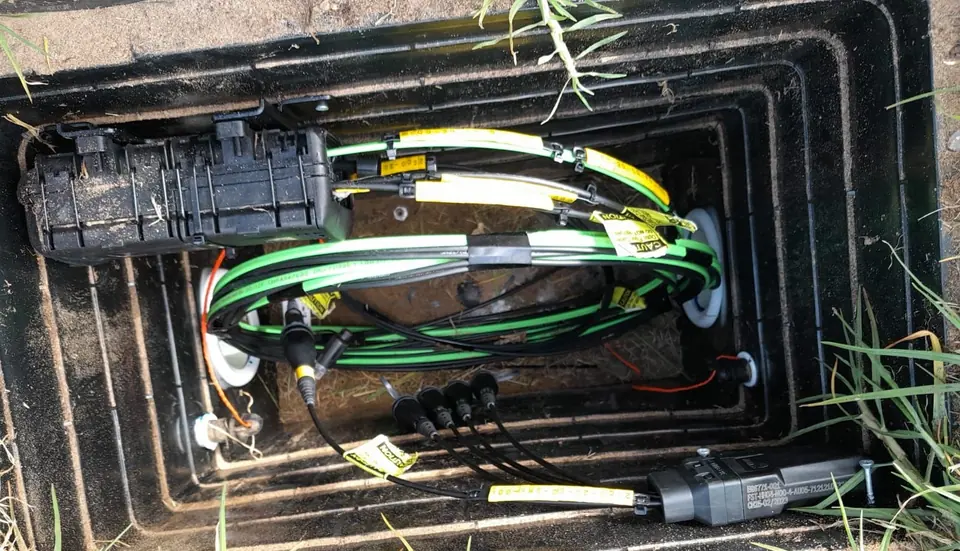
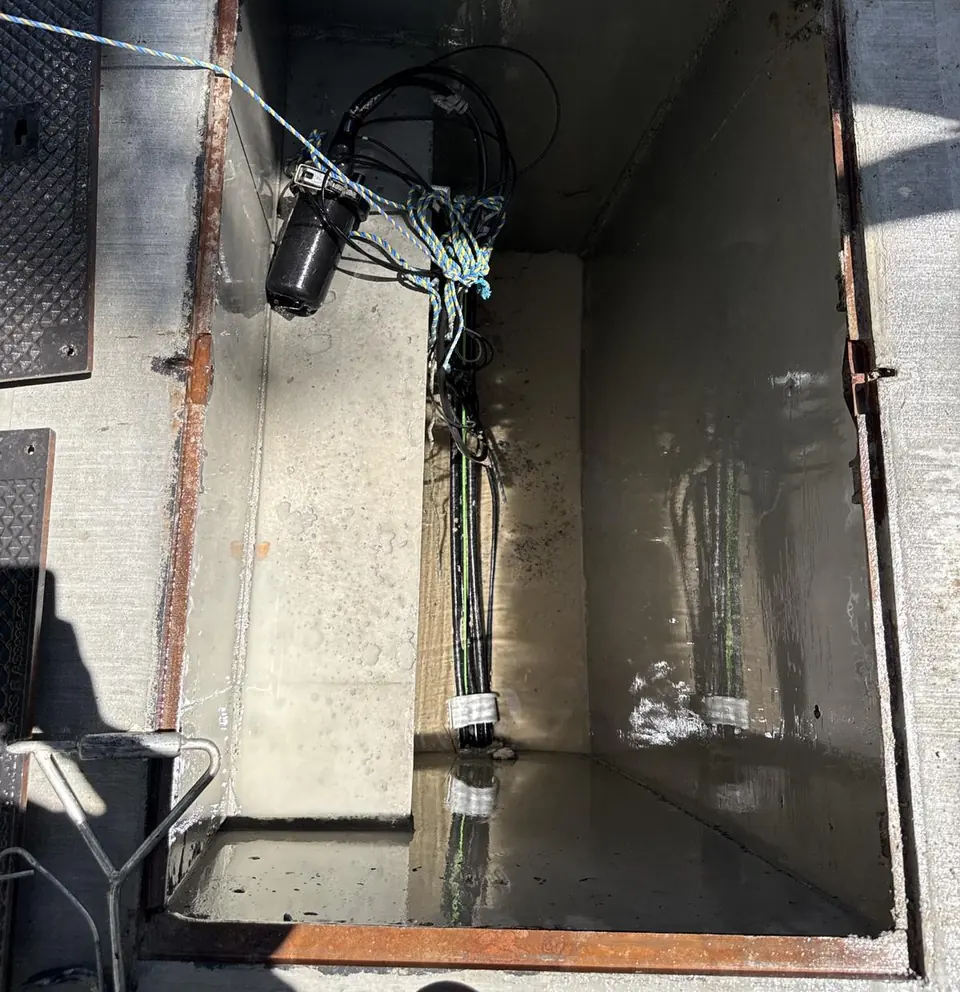
Cable installed in pits, pathways and building entries, sequenced with the wider construction programme.
Cable management
Slack, labelling and securing completed to the project specification, with cable ends left where the splice plan needs them.
Civil interfaces
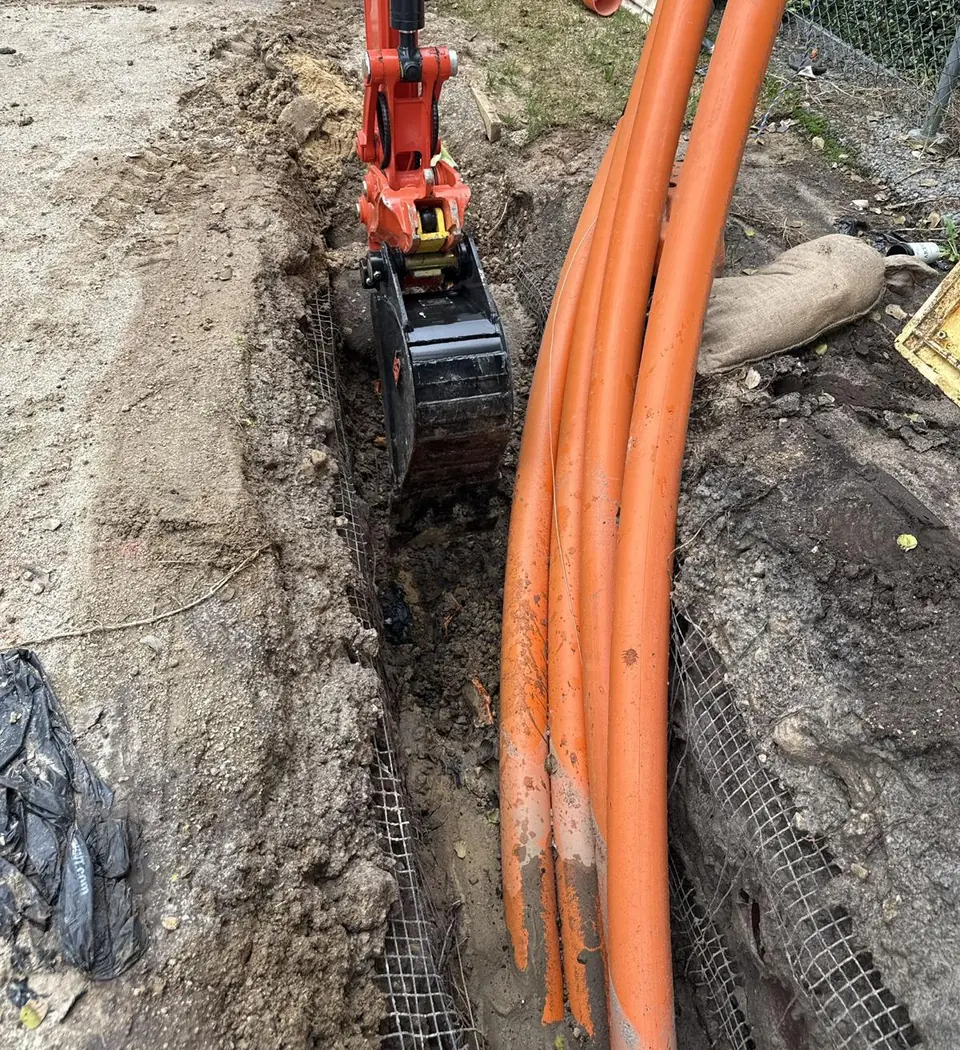
Pit access, pathway repairs and reinstatement coordinated with the civil scope around the haul.
Delivery
From proved pathway to installed cable
The order the work runs on site. Services are located and exposed before any machine excavation.
- Step 1
Prove the pathway
Conduit checked clear end to end; blockages located and dealt with first.
- Step 2
Set up
Cable drum, pit access and haul direction planned for each section.
- Step 3
Haul
Cable hauled pit to pit within its tension and bend limits.
- Step 4
Install and record
Slack, labelling and securing completed and the installation recorded.
Interfaces and records
Coordination, site constraints and handover records
What KZ COM coordinates with the other parties on the job, the constraints planned for before mobilising, and the records supplied at handover.
Delivery interfaces
- Civil pathway
- Blockages located and repaired before the haul.
- Network owner
- Authorisation and any workforce accreditation for work in its pits and conduit.
- Jointing crew
- Slack and cable ends left where the splice plan needs them.
Site constraints planned for
- Haul lengths between pits
- Condition of existing conduit
- Pit access and traffic
- Cable type, count and bend limits
Records supplied
- Haul sections and cable lengths
- Slack and labelling locations
- Blockages found and repaired
- Photos for handover
Health, safety & quality
Safety and quality on this scope
The controls and checks that matter most on this work.
Underground services
Before You Dig Australia (BYDA) information reviewed, services located and marked, and crossings exposed by vacuum excavation or by hand before machine excavation.
Site-specific SWMS
Where the scope includes high-risk construction work, such as trenching, work near underground services or beside traffic, the Safe Work Method Statement is reviewed with the crew before work starts.
Inspection points
Depths, pit levels, conduit continuity and surface finish checked during and at the end of the work.
Handover records
Depths, routes, pit positions and photos captured as the work goes in, for the as-built package.
For estimators
Information needed to price it
- Cable type and count, and haul lengths between pits
- Condition of the existing conduit, if known
- Who owns the network and who is engaging the work
- Documentation your specification requires
- Accreditation or registration requirements for the project
Scope and responsibilities
- Work in an existing network’s pits and conduit proceeds under the network operator’s access authorisation, arranged through the party engaging the work.
- Customer cabling inside premises is carried out by a registered cabler under ACMA’s cabling provider rules (opens in a new tab); KZ COM scopes its part around how cabling is being handled.
Tell us who is engaging the work and what your specification requires, and KZ COM will confirm its part before pricing.
Related capabilities
Tender and project enquiries
Send the scope, the site location and your timing, or ask for the information your assessment needs.